Thermage FLX vs Ultherapy
Thermage FLX vs Ultherapy
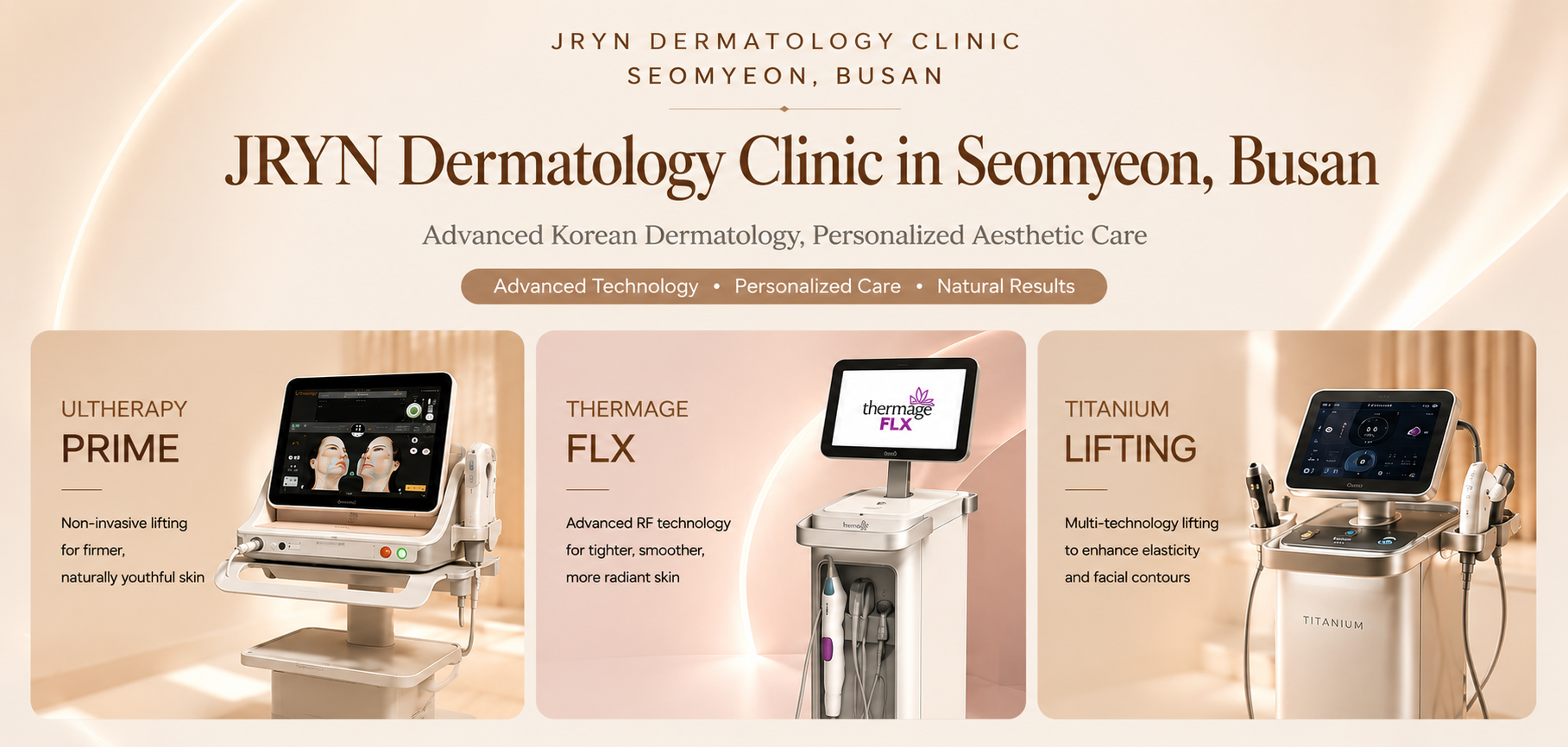
Thermage FLX and Ultherapy are two of the most popular non-surgical skin tightening treatments in Korea. While both aim to improve skin laxity and reduce signs of aging, they use completely different technologies and target different layers of the skin.
The choice often depends on whether your main concern is skin tightening, facial lifting, or contour definition.
What Is Thermage FLX?
Thermage FLX uses radiofrequency (RF) energy to heat the dermis and stimulate collagen production.
Main benefits include:
- Skin tightening
- Improved skin elasticity
- Smoother skin texture
- Reduction of fine wrinkles
- Better skin firmness
- Overall rejuvenation effect
Thermage primarily targets the skin itself rather than deeper facial support structures.
What Is Ultherapy?
Ultherapy uses microfocused ultrasound (HIFU) energy to reach deeper tissues, including the SMAS layer.
Main benefits include:
- Facial lifting
- Jawline definition
- Cheek lifting
- Neck tightening
- Brow lifting
- Improved facial contours
Ultherapy is often considered a lifting treatment rather than a skin-quality treatment.
How the Technologies Differ
Thermage FLX
- Radiofrequency energy
- Treats dermal collagen layers
- Focuses on tightening skin
- Broad heating pattern
Ultherapy
- Focused ultrasound energy
- Targets deeper structural layers
- Focuses on lifting tissues
- Precise energy delivery
The biggest difference is depth. Ultherapy reaches deeper support structures, while Thermage focuses more on the skin itself.
Best for Different Concerns
Thermage FLX is often better for:
- Mild skin laxity
- Fine lines
- Crepey skin
- Enlarged pores
- Skin texture concerns
- Overall firmness improvement
Ultherapy is often better for:
- Sagging jawline
- Lower face heaviness
- Loose neck skin
- Early jowls
- Drooping cheeks
- Facial contour improvement
Areas Commonly Treated
Thermage FLX
- Full face
- Eyes
- Neck
- Décolletage
- Body tightening areas
Ultherapy
- Lower face
- Jawline
- Neck
- Chin area
- Brow area
- Mid-face lifting
Ultherapy is generally more focused on lifting-specific zones.
Results Timeline
Thermage FLX
- Some tightening may be noticeable early
- Collagen remodeling continues for 2–6 months
- Gradual improvement over time
Ultherapy
- Mild early lifting possible
- Most improvement develops over 2–6 months
- Lifting becomes more visible as collagen rebuilds
Both treatments require patience because collagen production takes time.
Pain and Comfort
Thermage FLX
- Generally considered more comfortable
- Improved FLX technology reduced treatment discomfort
- Short recovery period
Ultherapy
- Usually considered more uncomfortable
- Energy is delivered to deeper tissues
- Temporary tenderness may occur afterward
Comfort levels vary significantly between individuals.
Longevity of Results
Thermage FLX
- Typically lasts 12–18 months
- Maintenance often performed yearly
Ultherapy
- Typically lasts 12–18 months
- Some patients maintain results longer
- Annual maintenance is common
Lifestyle, age, and skin condition affect longevity.
Average Price in Korea
Thermage FLX
- Full face: ₩1,200,000 – ₩3,500,000+
- Eye Thermage: ₩500,000 – ₩1,500,000
Ultherapy
- Full face: ₩1,000,000 – ₩4,000,000+
- Face and neck combinations may cost more
Pricing varies based on shot count and treatment area.
Which Is Better?
Choose Thermage FLX if you:
- Want tighter, firmer skin
- Are concerned about skin texture
- Have fine wrinkles
- Want improved elasticity
- Prefer a more comfortable treatment
Choose Ultherapy if you:
- Want lifting rather than tightening
- Have jawline sagging
- Notice early jowls
- Want better facial contours
- Have loose neck skin
Final thoughts
Thermage FLX and Ultherapy are not direct substitutes because they address different aspects of facial aging. Thermage FLX excels at improving skin firmness, texture, and elasticity, while Ultherapy is designed to lift deeper tissues and improve facial contours. If your main concern is loose skin quality, Thermage FLX is often the better choice. If sagging and loss of facial definition are your primary concerns, Ultherapy is typically the stronger option. For many patients, combining both treatments provides the most comprehensive rejuvenation results.