What Is HIFU? How Ultrasound Skin Tightening Works

HIFU, or high-intensity focused ultrasound, is a non-surgical skin tightening treatment that focuses ultrasound energy at specific depths beneath the skin. The energy heats tiny points of tissue, which triggers the body to produce new collagen and gradually tighten and lift the skin. Results usually appear over two to three months and are subtle. It is best suited to people with mild to moderate sagging rather than heavy loose skin.
Below, we explain the science behind HIFU in plain language, what it can and cannot do, and what to expect if you are considering it.
The Basic Science: Focusing Sound Into Heat
Ultrasound is sound at frequencies too high for humans to hear. In medicine, low-energy ultrasound is used for imaging, such as pregnancy scans. When ultrasound waves are focused, like sunlight through a magnifying glass, they converge at a single point and concentrate their energy there.
In HIFU for skin, a handpiece called a transducer focuses energy at a set depth, often around 1.5, 3.0 or 4.5 millimetres beneath the surface. At that focal point, tissue briefly heats to a temperature high enough to cause a tiny thermal injury called a thermal coagulation point. The tissue above and below the focus is largely spared, which is why the skin surface usually stays intact.
Which Layers HIFU Targets
Different transducer depths reach different structures:
- Superficial dermis (about 1.5 mm): aimed at skin texture and fine lines.
- Deep dermis (about 3.0 mm): targets the collagen-rich layer that supports skin firmness.
- SMAS layer (about 4.5 mm): the superficial muscular aponeurotic system, a fibrous layer that surgeons tighten during facelifts.
Reaching the SMAS without surgery is what makes HIFU distinctive among non-invasive lifting technologies. Practitioners often combine depths in one session to address both lift and skin quality.
What Happens After the Energy Is Delivered
The body responds to the thermal points in stages:
- Immediate contraction: heated collagen fibres shrink, creating a slight, temporary tightening.
- Inflammation: over days, the body starts a healing response at each point.
- Collagen remodelling: over weeks to months, new collagen is produced and existing fibres reorganise, gradually firming the tissue.
This is why results take time. Most people see changes from around two to three months, with improvement continuing up to about six months.
What HIFU Can and Cannot Do
Commonly reported benefits
- Mild lifting of the brow and jawline
- Firmer skin under the chin and on the neck
- Softening of early jowls
- Improved overall firmness and texture
Limitations
- It does not replace lost volume; fillers or other methods may be needed.
- It cannot remove large amounts of loose skin.
- Results are gradual and modest compared with surgery.
- Some people respond minimally, and this is difficult to predict.
- Results are temporary, often lasting around a year or so, depending on the device and individual.
Different HIFU Devices
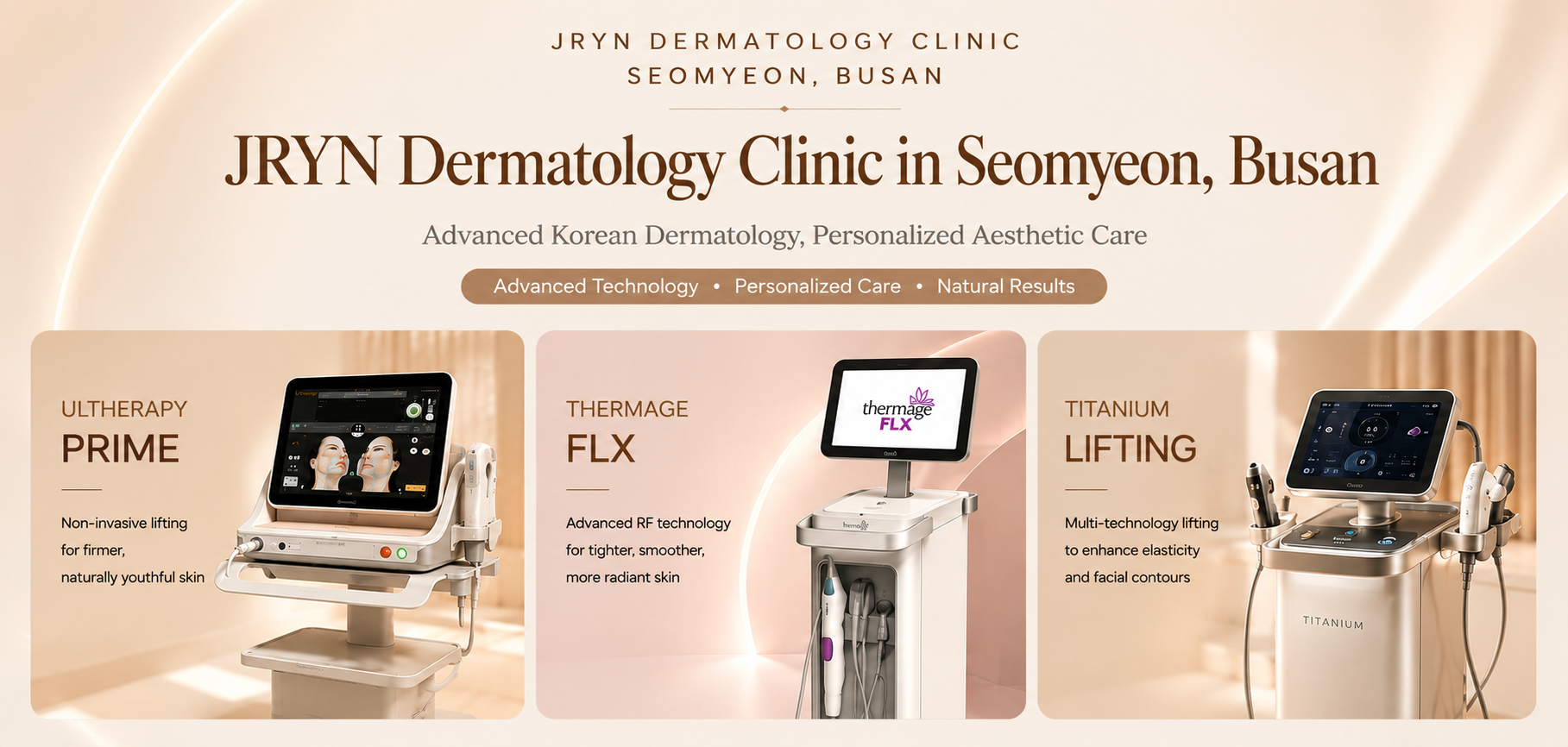
HIFU is a technology, and many devices use it. Ultherapy, which includes real-time imaging, is one of the best-known. In Korea, several domestically developed HIFU devices are widely used, including Shurink and others. Devices differ in transducer options, energy delivery and comfort. Evidence comparing them head to head is limited, so the practitioner's experience and the treatment plan often matter as much as the brand.
Safety and Side Effects
HIFU is generally considered low risk when performed properly. Common reactions include:
- Temporary redness and mild swelling
- Tenderness, particularly along the jaw
- Tingling or small bruises
Less common effects include temporary numbness or nerve irritation. Rarely, burns or contour changes have been reported, generally linked to technique or excessive energy. HIFU is not usually recommended over active skin infections, open wounds, or in some people with certain implants or medical conditions. Pregnancy is commonly a reason to postpone elective cosmetic treatment.
Is HIFU Worth Considering?
HIFU may suit you if you:
- Are noticing early sagging, often from your 30s onward
- Want gradual change with little or no downtime
- Prefer to avoid or delay surgery
- Accept that results are subtle and require maintenance
For visitors to Korea, where HIFU is commonly offered, the short downtime makes it easy to fit into a trip. Just remember that results will appear after you return home.
Frequently asked questions
Is HIFU the same as Ultherapy?
Ultherapy is one brand of HIFU device, distinguished by its built-in imaging. Other HIFU devices use similar principles.
Does HIFU hurt?
It can be uncomfortable, particularly over bony areas. Numbing cream and adjusted settings can help.
How many sessions do I need?
Many people have one session and consider maintenance later. Some devices are used in more frequent, lighter sessions. Your doctor will advise.
Can HIFU be used on the body?
Some devices offer body applications, such as for loose skin on the abdomen or arms, though evidence is more limited than for the face.
Speak With a Dermatologist
HIFU can be a useful tool for early skin laxity, but it is not right for everyone. A qualified dermatologist can examine your skin, explain which technology fits your concerns and help you set realistic expectations.